
This text was published by DE FACTO, one of fifteen EDMO Hubs.
For the most accurate information, please refer to the original version.
On February 28, 2026, the United States and Israel launched a vast campaign of strikes against Iran, triggering an Iranian response with missile salvos targeting not only Israel, but also the Gulf countries where American military bases are located. In the space of a few days, the Middle East caught fire in a conflict of unprecedented magnitude. Iran imposed the closure of the Hormuz Strait and extended its reprisals across the region, while Hezbollah opened a new front in Lebanon.
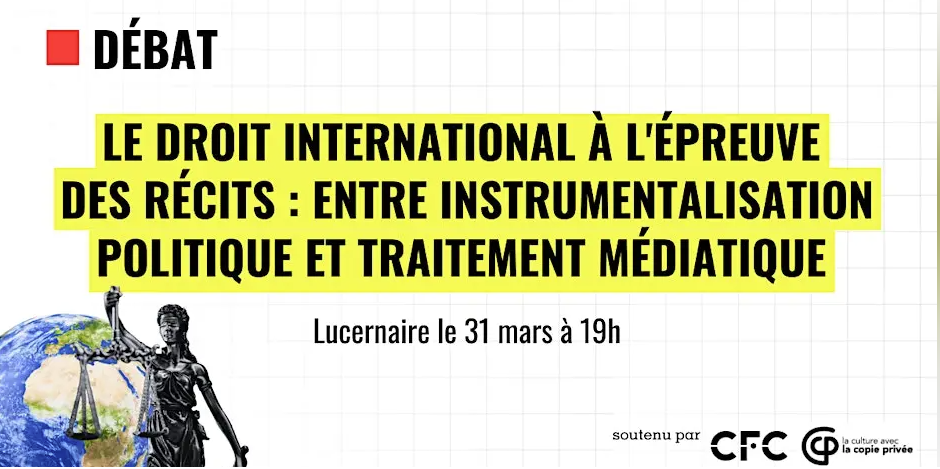
Very quickly, some describe the American-Israeli strikes as violations of Iranian sovereignty with regard to international law, while Washington and Tel Aviv invoke self-defense and nuclear threat. Every day, every strike, every response, every official statement is accompanied by a narrative battle over their legality: war crimes or military necessity? Aggression or self-defense? The concepts of international humanitarian law are convened, challenged and reversed.
These dynamics are now reaching unprecedented intensity and media visibility. The institutions of international justice, led by the International Criminal Court and the International Court of Justice, are themselves caught in these narrative battles, sometimes brandished as guarantors of a universal legal order, sometimes accused of bias or inefficiency.
How to distinguish the rigorous use of law from its instrumentalization? What role do the media play in disseminating legal concepts to the general public? And to what extent does legal disinformation weaken the authority of international institutions?